Featured Articles
Popular Articles
-
 Dremio Blog: Open Data Insights
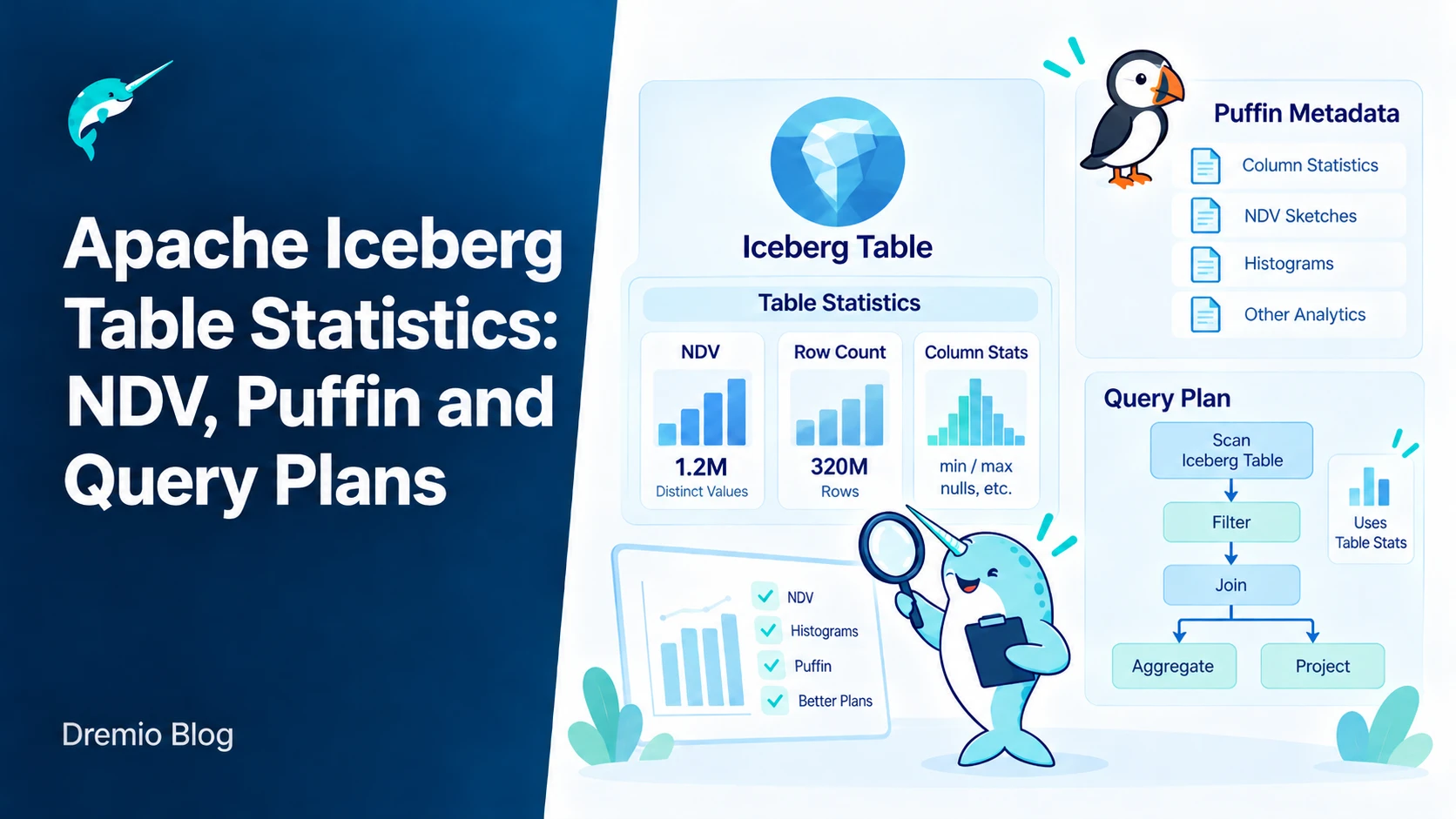
Apache Iceberg Table Statistics: NDV, Puffin and Query Plans
-
 Dremio Blog: Open Data Insights
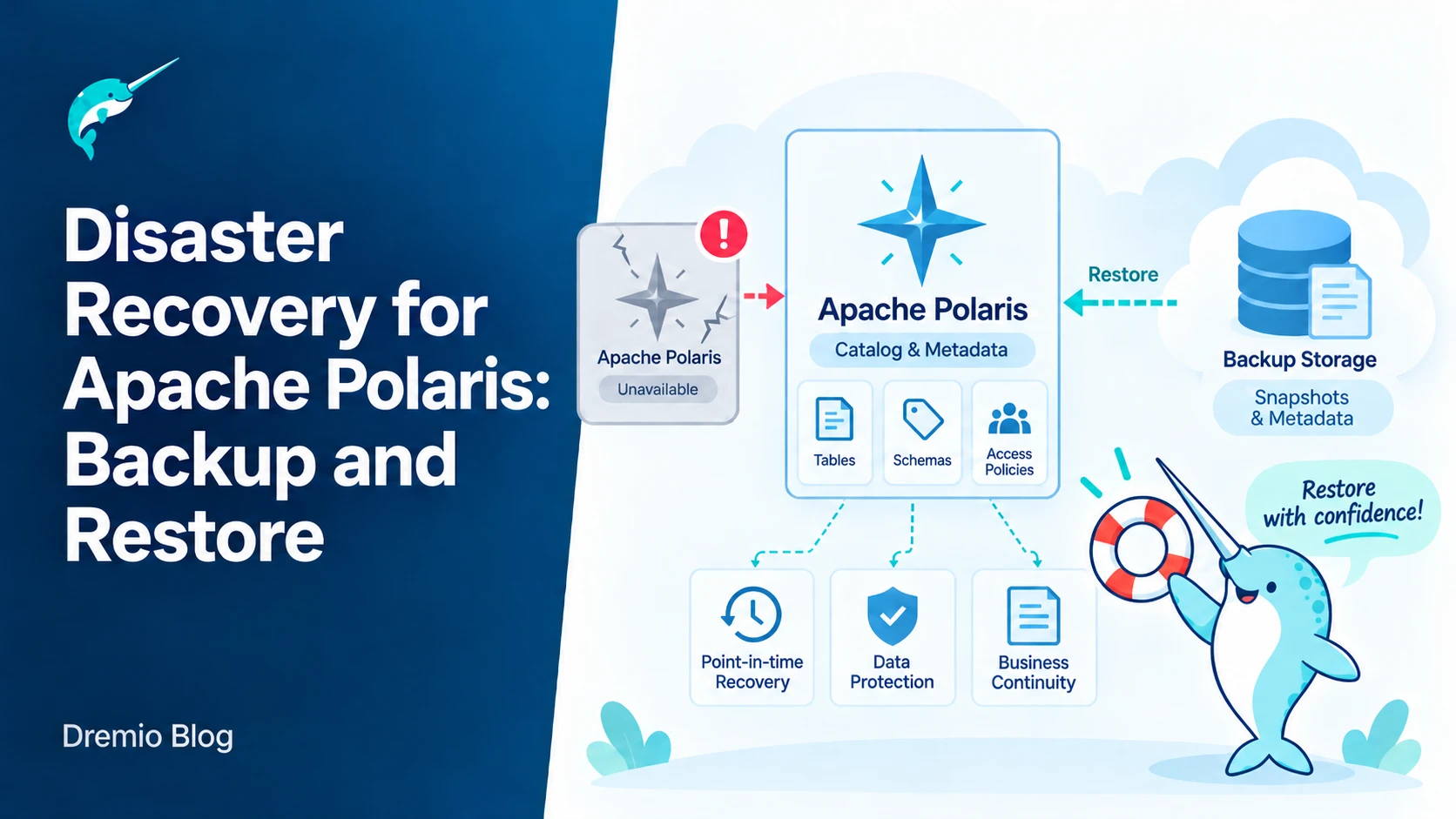
Disaster Recovery for Apache Polaris: Backup and Restore
-
 Dremio Blog: Open Data Insights
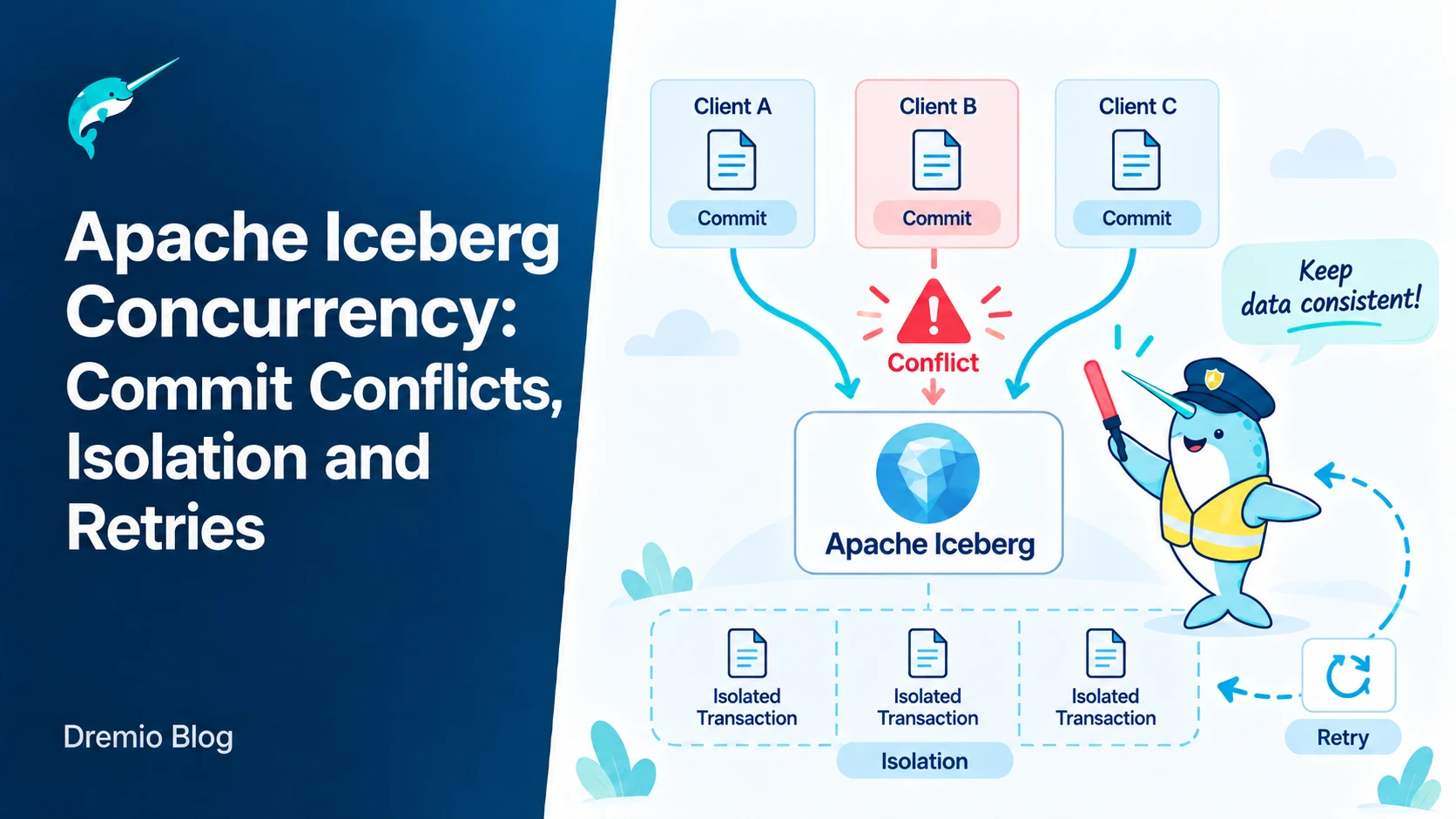
Apache Iceberg Concurrency: Commit Conflicts, Isolation and Retries
-
 Dremio Blog: Open Data Insights
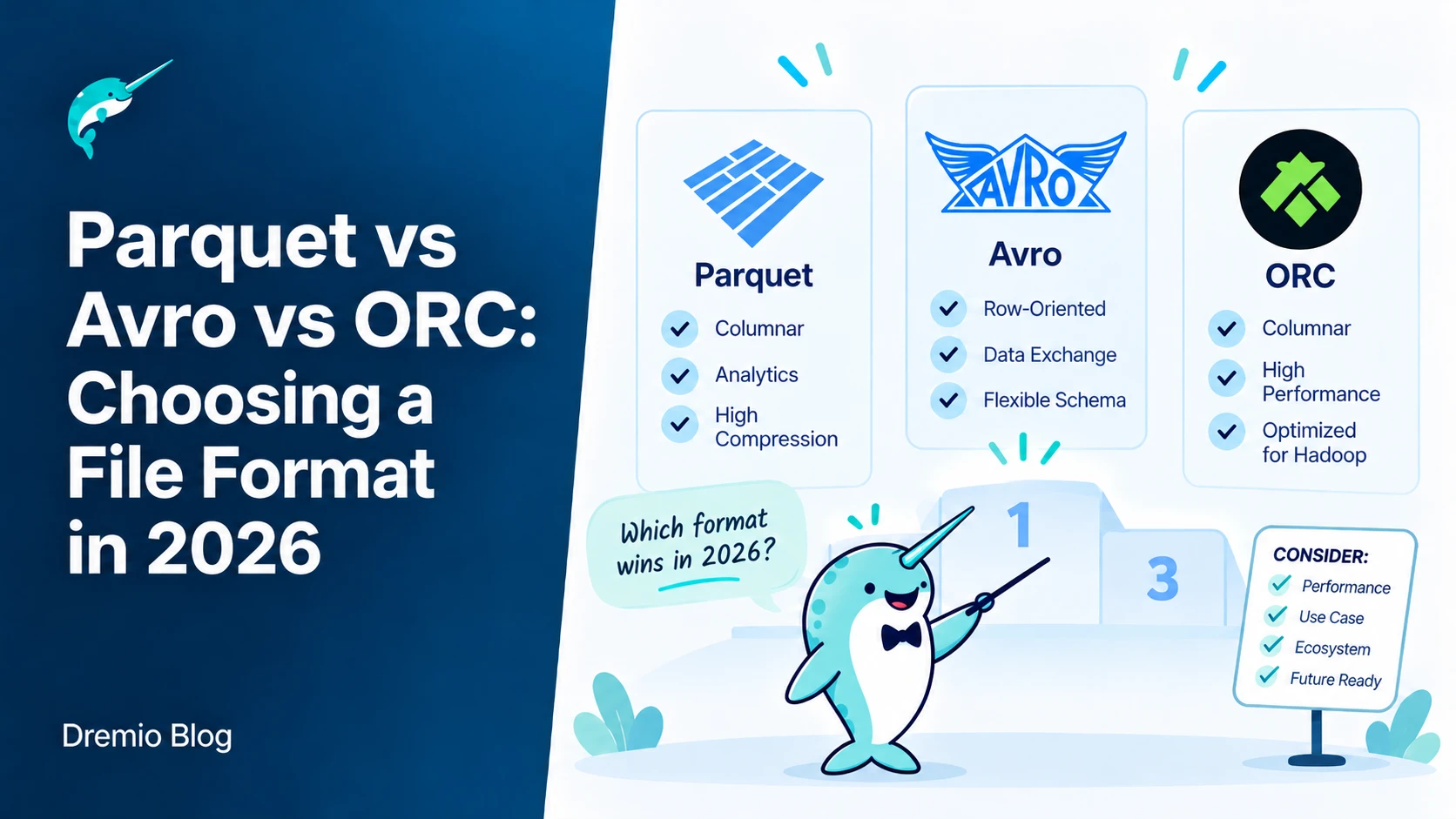
Parquet vs Avro vs ORC: Choosing a File Format in 2026
Browse All Blog Articles
-
 Dremio Blog: Open Data Insights
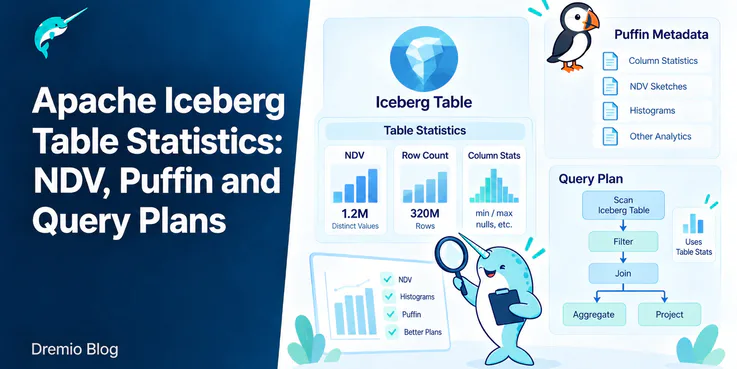
Apache Iceberg Table Statistics: NDV, Puffin and Query Plans
Iceberg keeps per-file bounds automatically but table-level NDV statistics only when you compute them. Why that decides join order, and how to keep them fresh.
-
 Dremio Blog: Open Data Insights
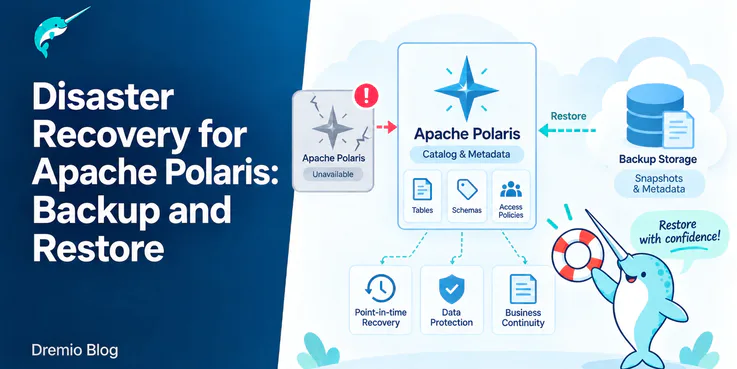
Disaster Recovery for Apache Polaris: Backup and Restore
Recovering Polaris means recovering a metastore and object storage separately. What to back up, the order to restore in, and the failure mode nobody plans for.
-
 Dremio Blog: Open Data Insights
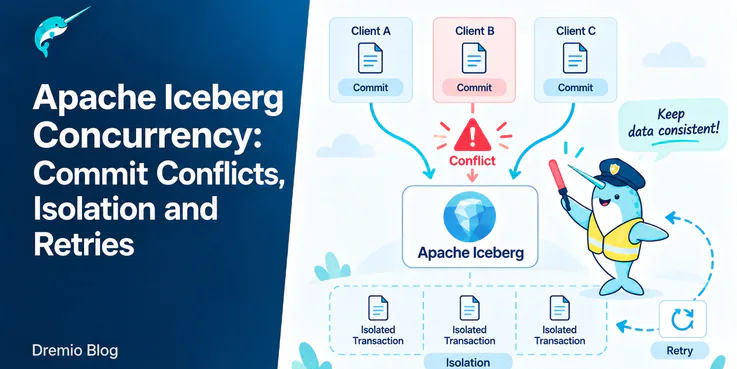
Apache Iceberg Concurrency: Commit Conflicts, Isolation and Retries
What causes an Iceberg commit conflict, the retry properties that govern it, the two isolation levels, and how to design conflicts out of a busy table.
-
 Dremio Blog: Open Data Insights
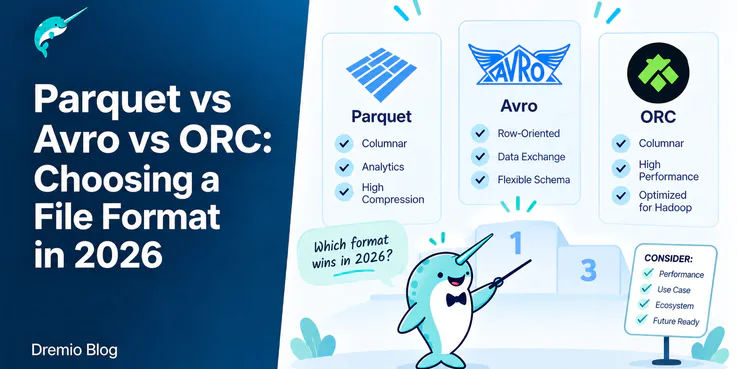
Parquet vs Avro vs ORC: Choosing a File Format in 2026
Parquet and ORC are columnar and built for reading. Avro is row-oriented and built for writing. How to choose, and why Iceberg quietly uses all three.
-
 Dremio Blog: Open Data Insights
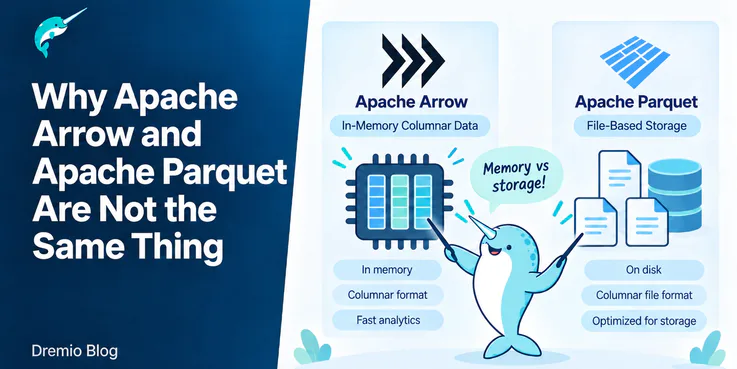
Why Apache Arrow and Apache Parquet Are Not the Same Thing
Parquet is how columnar data sits on disk and Arrow is how it sits in memory. Every difference between them follows from that one split.
-
 Dremio Blog: Open Data Insights
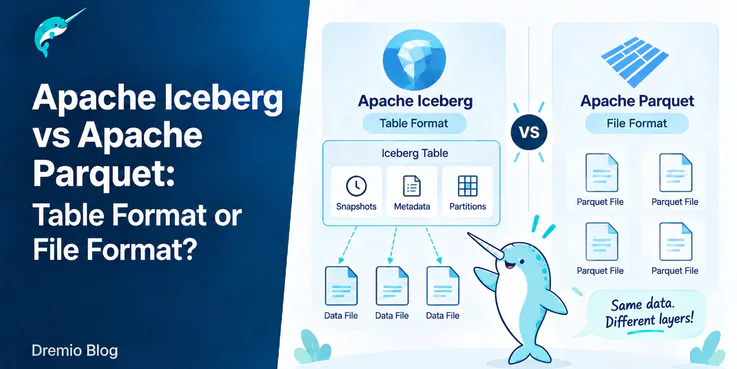
Apache Iceberg vs Apache Parquet: Table Format or File Format?
Iceberg is a table format and Parquet is a file format. They are different layers of one stack, not alternatives, and an Iceberg table contains Parquet files.
-
 Dremio Blog: Open Data Insights
Apache Iceberg 1.12.0: What’s New, Breaking Changes, and Upgrade Guide
Apache Iceberg 1.12.0 expands v3 engine support, REST catalog operations, streaming reliability, and v4 groundwork. Learn how to upgrade safely.
-
 Dremio Blog: Open Data Insights
Apache Polaris 1.8.0: What’s New, Breaking Changes, and Upgrade Guide
Apache Polaris 1.8.0 adds semantic-model privileges, safer commit handling, pagination controls, CLI improvements, and important database upgrade steps.
-
 Dremio Blog: Open Data Insights
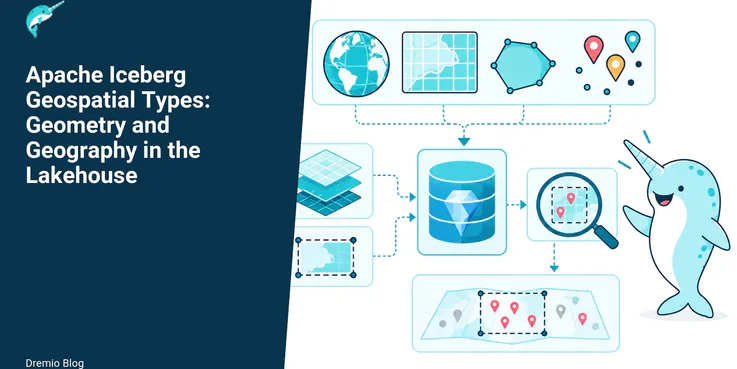
Apache Iceberg Geospatial Types: Geometry and Geography in the Lakehouse
Apache Iceberg v3 defines geometry and geography as first-class primitive types. Values are encoded as WKB in Avro and Parquet, with optional CRS metadata and spatial bounds that engines can use for pruning. The specification is stable, but engine support is version-specific, so teams should test every reader and writer before upgrading a shared table.
-
 Dremio Blog: Open Data Insights
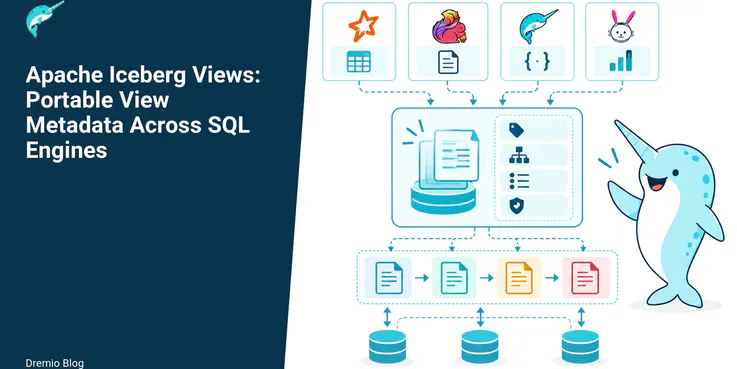
Apache Iceberg Views: Portable View Metadata Across SQL Engines
The Apache Iceberg View Spec makes view metadata portable by storing versioned schemas, catalog and namespace context, dependencies, properties, and one or more SQL representations. It does not make every SQL expression universally executable. Portability depends on a catalog and engines that implement the spec and agree on a supported dialect representation.
-
 Dremio Blog: Open Data Insights
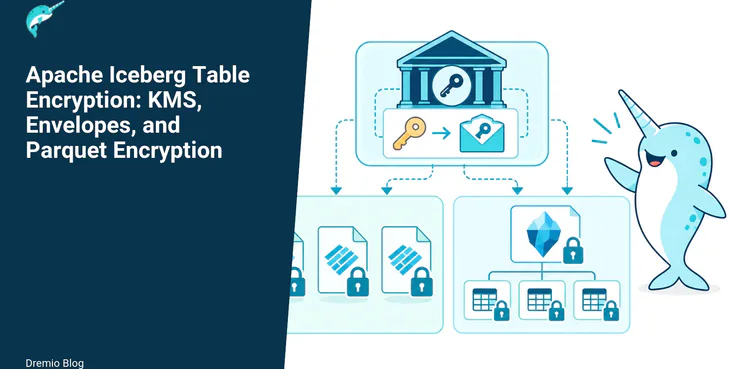
Apache Iceberg Table Encryption: KMS, Envelopes, and Parquet Encryption
Iceberg table encryption separates file encryption from key management. Writers create data keys, encrypt files, wrap those keys with a key encryption key in a KMS, and store key metadata with the files. Iceberg can encrypt data files, delete files, manifests, and manifest lists. Table metadata JSON is intentionally not encrypted by the Iceberg encryption specification.
-
 Dremio Blog: Open Data Insights
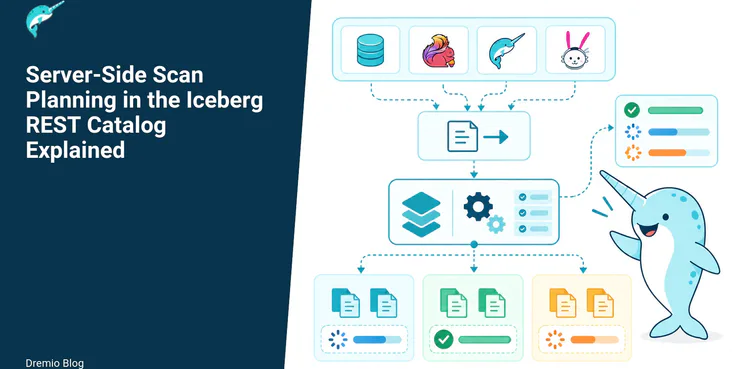
Server-Side Scan Planning in the Iceberg REST Catalog Explained
Server-side scan planning lets an Iceberg REST catalog plan table scans close to metadata instead of sending every manifest to the client. A client discovers the capability, submits a scan request, receives completed tasks or an asynchronous plan identifier, then polls for batches and can cancel work it no longer needs. The feature reduces metadata transfer, but it moves planning load and observability into the catalog service.
-
 Dremio Blog: Open Data Insights
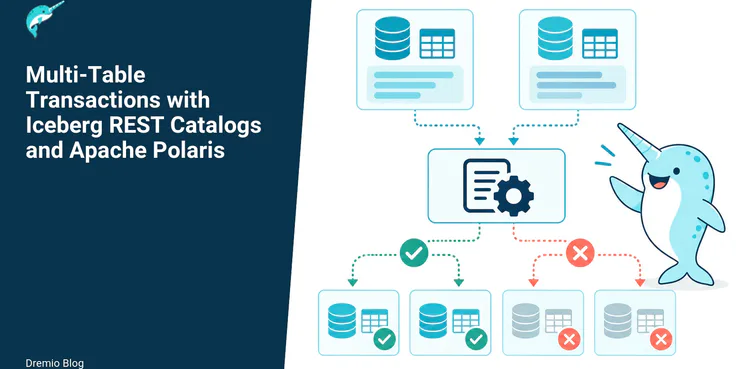
Multi-Table Transactions with Iceberg REST Catalogs and Apache Polaris
The Iceberg REST protocol defines an optional transaction commit endpoint that can submit updates for several tables as one catalog operation. That endpoint can provide catalog-level atomicity when the server implements it, but a usable multi-table transaction also requires client support, conflict handling, and clear failure semantics. A REST catalog label alone does not guarantee that an engine will issue coordinated commits.
-
 Dremio Blog: Open Data Insights
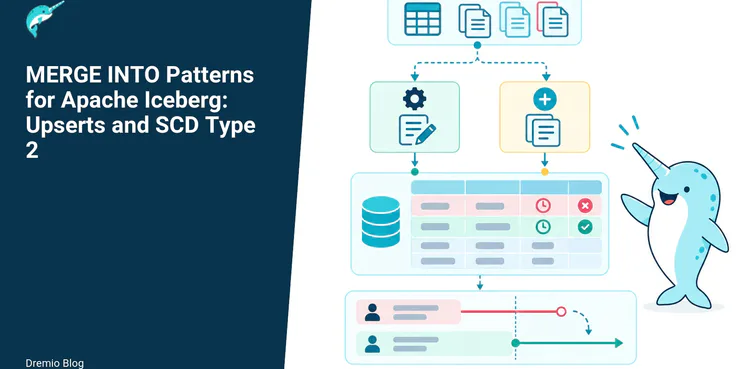
MERGE INTO Patterns for Apache Iceberg: Upserts and SCD Type 2
MERGE INTO is the clearest way to express keyed changes against an Iceberg table, but reliable upserts start before the MERGE. Deduplicate the source to one action per key, define late-arrival rules, and make the batch replayable. For SCD Type 2, close the current row and insert a new version in a controlled transaction, then compact the delete and data files the workload creates.
-
 Dremio Blog: Open Data Insights
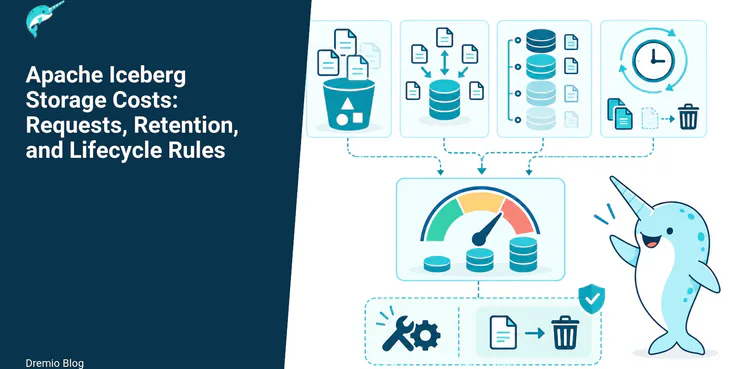
Apache Iceberg Storage Costs: Requests, Retention, and Lifecycle Rules
Iceberg storage cost is not only the number of terabytes in data files. It includes PUT, GET, LIST, and DELETE requests, retained snapshots, delete files, manifests, metadata JSON, compaction rewrites, and recovery windows. The safest cost plan starts with table-aware expiration and orphan cleanup, then applies object-store lifecycle rules only to paths and objects whose ownership is understood.
- 1
- 2
- 3
- …
- 48
- Next Page »